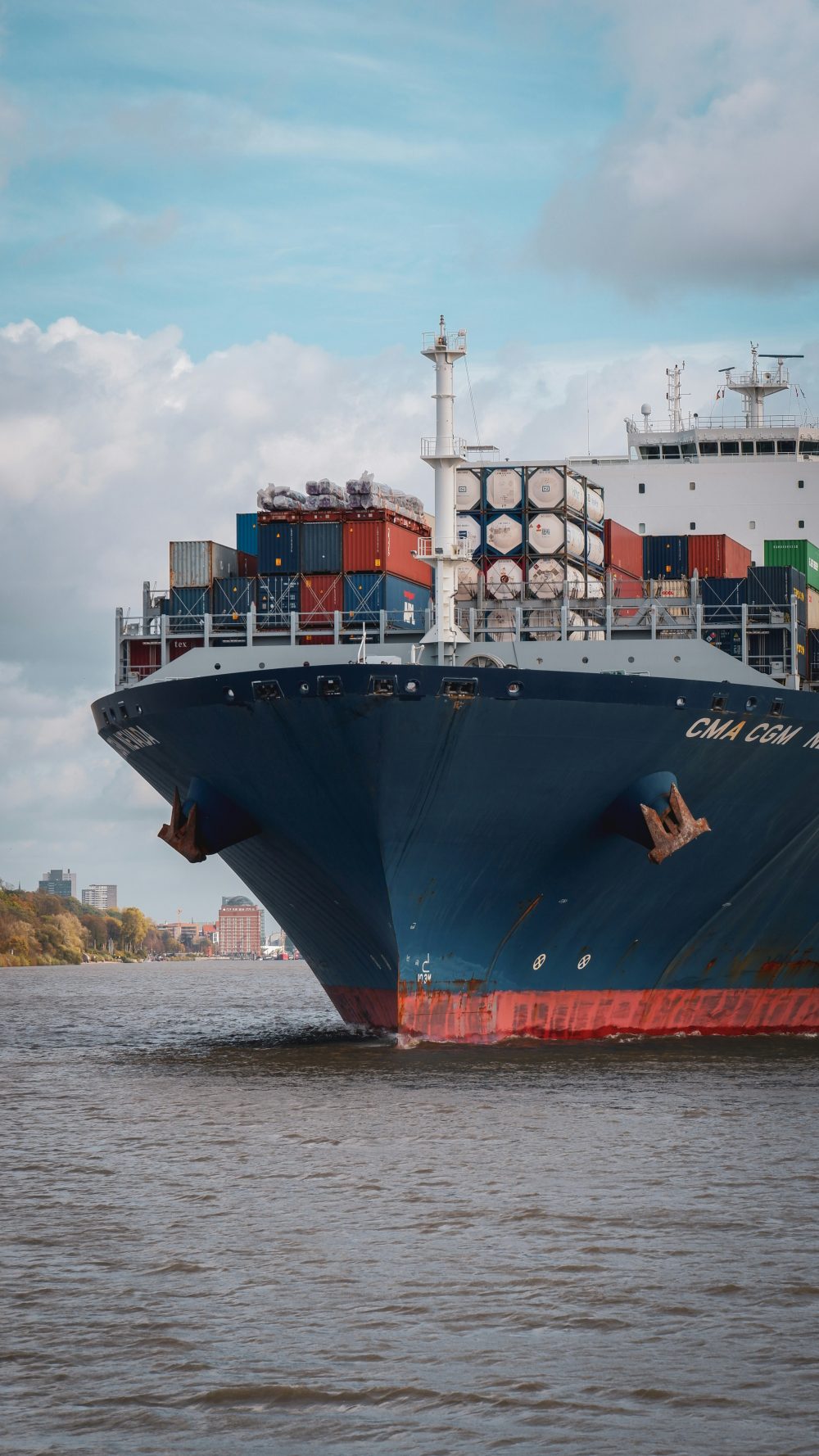
Australia’s Maritime Emissions Reduction Plan
We find that shipping is one of the least-discussed emissions sectors in Australian ESG conversations, yet it underpins so many items that the Australian economy produces and consumes. Ships transport over 99% by weight and around 87% by value of Australia’s international trade. On 26 August 2026, the Australian Government released its Maritime Emissions Reduction National Action Plan (MERNAP) which is the country’s first national plan for reducing maritime emissions. This article explains what the plan contains, where Australia sits in the global context, and what the next five years needs to deliver.
Why Maritime Emissions Matter
Global shipping accounts for approximately 3% of global greenhouse gas (GHG) emissions. Without intervention, the International Maritime Organization (IMO) has projected that shipping emissions could grow significantly by 2050. The sector is considered one of the harder sectors to decarbonise as it operates across international jurisdictions, relies on a small number of highly energy-dense fuels, and involves assets with 20 to 30-year operational lifetimes that make rapid fleet turnover difficult.
Australia’s domestic maritime sector emitted around 2 million tonnes of GHG emissions in 2021-22, representing 2.2% of Australia’s transport emissions and 0.4% of total national emissions. Those numbers sound modest, but they do not capture the full picture. Australia carries 14% of global seaborne trade by volume, and the ships carrying Australian freight contribute approximately 4% of global CO₂ emissions from international shipping. The lower proportional emissions share reflects comparatively efficient shipping operations i.e. large bulk carriers on long routes running at slower speeds, with average voyage fuel consumption and GHG emissions around 18% lower than the global average.
The maritime sector also employs nearly 29,000 people and contributes A$3.8 billion to the Australian economy annually, spanning ports, commercial vessels, the Defence Civilian Vessel (DCV) sector and the maritime workforce.
What the MERNAP Contains
The MERNAP covers five priority action areas:
- supporting low-carbon fuels and green energy exports
- enhancing port infrastructure and operations
- investing in research and innovation
- reducing regulatory barriers for emerging technologies, and
- ensuring timely workforce upskilling.
The government has committed a total of approximately AUD $150 million across a suite of initiatives. The largest single allocation is AUD $51.7 million for a Maritime Single Window which is a digital system allowing ships to submit all information required when calling at Australian ports through a single interface, designed to reduce turnaround times and fuel consumption from vessels waiting outside ports. AUD $30 million has been allocated to the Australia-Singapore Low-Emissions Technologies (ASLET) Initiative for maritime and port operations. AUD $55 million sits within the Transport Resilience and Capacity Kickstart program. AUD $13.8 million has been directed to the Maritime Skills and Training Initiative, run through Industry Skills Australia in partnership with the Australian Maritime Safety Authority (AMSA).
The plan also identifies the Australia-Singapore Green and Digital Shipping Corridor (GDSC) as a priority. The corridor was formalised through a Memorandum of Understanding in March 2024 between Australia’s Department of Infrastructure, Transport, Regional Development, Communications and the Arts and the Maritime and Port Authority of Singapore (MPA). Eight projects have been selected for funding under the ASLET initiative, with the Pilbara Ports Authority, Ports Victoria and Gladstone Ports Corporation each engaged in specific workstreams covering bunkering standards and alternative fuel supply chains.
How Australia Compares Globally
The global benchmark for maritime decarbonisation is the IMO’s 2023 revised strategy, which set a target of net zero GHG emissions from international shipping by or around 2050, with an interim reduction of at least 20% by 2030 relative to 2008 levels. The EU has pushed for more ambition by targeting a 29% reduction by 2030, 83% by 2040 and net zero by 2050.
The most significant ongoing debate at the IMO is whether to introduce a global shipping levy. A levy would require ship owners to pay for every tonne of GHG their vessels emit, making the use of polluting bunker fuels more expensive and accelerating the commercial viability of green alternatives. At IMO negotiations in London in March 2026, a majority of participating countries expressed support for a financial mechanism, with proposed levy levels ranging from USD 18 to USD 150 per tonne of CO₂ emitted. Researchers from the Rocky Mountain Institute estimate that a levy of USD 130 to USD 180 per tonne would be needed to close the price gap between conventional bunker fuel and green ammonia by 2030. By September 2026, the IMO’s draft two-tier carbon pricing structure proposed USD 100 per excess tonne at the softer compliance threshold and USD 380 per tonne for the stricter level. The measure passed with support from 63 countries, including China and Brazil, both of which had previously opposed it.
Australia opposed the global shipping levy at an earlier stage of negotiations, alongside major exporters including Brazil, China and Saudi Arabia. The concern from commodity-exporting nations is that a levy raises the cost of moving bulk goods — iron ore, coal, gas and agricultural products — which has direct implications for export competitiveness. That is a legitimate commercial concern. It is, however, a position that places Australia in an increasingly small minority at the IMO, and one that sits uncomfortably alongside the ambitions expressed in the MERNAP itself.
Several other countries have moved ahead with specific maritime decarbonisation programs. South Korea passed a Green Shipping Corridor Support Act in 2026. Singapore, the world’s largest bunkering hub, has committed significant investment in alternative fuel infrastructure including methanol and ammonia bunkering. Norway, whose fleet is the fifth most valuable in the world, has long advocated for ambitious IMO targets and has domestic incentive structures for clean shipping. The EU has included shipping in its Emissions Trading System (ETS) from 2024, creating a domestic carbon price for vessels calling at EU ports.
The Australia-Singapore Corridor
The Australia-Singapore Green and Digital Shipping Corridor is the most strategically significant element of Australia’s maritime decarbonisation effort. Singapore handles more bunker fuel than any other port globally, making it the central distribution point for fuel consumed by vessels across the Indo-Pacific. Australia has been assessed by the Maersk McKinney Moller Centre for Zero Carbon Shipping as having the greatest potential of any country to produce clean e-fuels for the marine industry, given its renewable energy resource base and existing grid infrastructure.
The combination of Australian fuel production potential and Singaporean distribution capability could be highly commercial for Australia. If the corridor delivers on its intent in establishing supply chains for zero or near-zero emission marine fuels, developing bunkering standards and procedures, and piloting digital solutions for port optimisation, it has the potential to become a demonstration case for what is possible across the Indo-Pacific. The corridor work is still in early stages at time of writing.
Shipping in the Scope 3 Carbon Emissions Context
For Australian companies with significant import or export supply chains, maritime emissions are a Scope 3 Category 4 (upstream transportation and distribution) or Category 9 (downstream transportation and distribution) exposure under the Greenhouse Gas (GHG) Protocol. Shipping regularly sits in the more difficult part of supply chain Scope 3 analysis in that it is difficult to oversee, difficult to measure with precision, and difficult to influence given the international nature of the sector and the contractual relationships involved.
Larger Australian companies are aware that emissions and risks sit in this space and are engaging with their suppliers and logistics providers where they can, but often not at the depth needed. Modern slavery risks compound the challenge too. Seafarers are among the most vulnerable groups in global supply chains, with documented issues around forced labour, passport retention and below-minimum-wage conditions on vessels operating under flags of convenience. The combination of carbon emissions and social risk in the same sector makes it one of the more complex Scope 3 categories, and industries more broadly, to manage.
The international nature of shipping and the relative weakness of global regulatory frameworks in comparison to domestic industries means this is likely to be a sector where improvement is slower than in other parts of the value chain. That does not reduce the obligation on Australian companies to understand and disclose their exposure, particularly as AASB S2 reporting raises the standard of Scope 3 disclosure across the market.
Our View
The MERNAP is Australia’s first national maritime decarbonisation plan and it is a meaningful step. The five action areas are well-structured, the Australia-Singapore corridor work has a strong strategic rationale, and the focus on green fuels, port infrastructure and workforce development reflects effective priorities for a country that is both a major commodity exporter and a potential producer of green marine fuels.
We note however, that Australia is investing in green shipping corridors at home while opposing a global levy at the IMO that would most directly accelerate the commercial case for those same corridors. The two positions can coexist, as a domestic investment strategy does not require a multilateral pricing mechanism to proceed. But as support for the levy grows and the countries opposing it become fewer, Australia’s position will attract more attention. We would expect that position to soften as the domestic green fuels industry matures and the commercial picture shifts.
The concern about the levy’s impact on bulk shipping costs is understandable. A charge of USD $100 to USD $380 per excess tonne of CO₂ adds cost to the movement of iron ore, coal and agricultural products. The irony is that Australia is also one of the countries with the most to gain from the transition those costs are designed to accelerate. If Australia becomes a leading producer and exporter of green ammonia and hydrogen (the fuels most likely to power the next generation of vessels) the long-term commercial opportunity outweighs the short-term cost concern. The MERNAP’s investment in green fuel supply chains suggests that awareness exists within government, even if the IMO position has not yet caught up with it.
We predict the gap between the ambition of the plan and its funding will be the main challenge over the next five years in this industry. Approximately AUD $150 million across all MERNAP initiatives is a start, but the infrastructure required to translate green corridor agreements into actual zero-emission vessel operations is orders of magnitude larger. The corridor work and the Australia-Singapore Initiative on Low Emissions Technologies (ASLET) are great starting points though. We will await the development of these initiatives!
Sources
- Department of Infrastructure, Transport, Regional Development, Communications and the Arts, Australia’s Maritime Emissions Reduction National Action Plan (MERNAP), 26 August 2026, infrastructure.gov.au
- Shipping Australia, Commonwealth releases Maritime Emissions Reduction National Action Plan, August 2026, shippingaustralia.com.au
- MHD Supply Chain, Government releases national plan to decarbonise maritime freight, 27 August 2026, mhdsupplychain.com.au
- Engine Online, Australia’s emissions plan charts course for shipping’s fuel switch, August 2026, engine.online
- Department of Foreign Affairs and Trade, Singapore-Australia Green and Digital Shipping Corridor Factsheet 2025, dfat.gov.au
- Maritime and Port Authority of Singapore (MPA) and CSIRO, MPA and CSIRO take next steps to catalyse maritime decarbonisation, mpa.gov.sg
- Ship Universe, IMO Carbon Price Heads for December 4 Showdown, September 2026, shipuniverse.com
- Climate Change News, Push for global shipping levy gains support, climatechangenews.com
- Lloyd’s List, Singapore and Australia ink pact to develop green shipping corridor, lloydslist.com
- Maersk McKinney Moller Centre for Zero Carbon Shipping, e-fuel production potential assessment, zerocarbonshipping.com
- International Maritime Organization (IMO), 2023 IMO Strategy on Reduction of GHG Emissions from Ships, imo.org
- Rocky Mountain Institute, Green Ammonia cost and levy analysis, rmi.org
Anabranch ESG Advisory provides independent advice on ESG strategy, climate disclosure, and sustainability reporting. The information in this article is general in nature and does not constitute legal or financial advice.